
Week One covers 5–11 October 2026; the first draft was compiled on 12 October. The account below preserves what I recorded when I wrote this journal. The final sections include a review and additions made after the presentation; words such as “currently” and “not yet submitted” refer to the time of each record.
This week's work extended from the research question into cleaning source material, checking data, comparing approaches, analysing demonstrations, and producing a report. Some source material needed to be recovered, some figures could not be compared directly, and a finished report still needed to be rewritten. Looking back, I want to describe the problems I actually worked through.
Treating the first research task as a consulting exercise
At the start, I set myself two requirements. First, important conclusions had to be traceable: a reader should be able to follow each key judgement back to its source. Second, I should not decide on an answer first and then look for material to support it.
To work towards those requirements, I used tools to divide the research brief into several parts: the background to the need, existing approaches, differences between them, and possible improvements. I expanded each part into a question tree, breaking large questions into smaller ones that could be checked. I also made two supporting tools: a source index recording where each item came from and which judgement it supported, and a comparison table placing different approaches against the same dimensions.
I used AI tools to help with the week's searching, source analysis, writing, layout, and technical checks. I decided and reviewed which questions to ask, where to investigate, which conclusions to keep, and which parts to start again. Most of the later work was organised around the question tree, source index, and comparison table.
Putting the material in order before drawing conclusions
The source material included reports, spreadsheets, web pages, and videos. Writing from it immediately would have caused several problems: multiple copies of the same file, overlapping versions, and figures in reports that still needed to be matched to their sources.
I handled them in this order. I kept every original file and made no changes to it. I checked duplicate copies by hash and archived one copy when their contents matched exactly, rather than judging by filename. I then checked how the selected figures mapped to sources, linked key numbers back to their origins, and marked anything I could not confirm separately. Finally, I brought the material into one master draft of the facts. Earlier versions were frozen and retained, not overwritten.
After that, the different versions of the report and presentation drew their facts from the same master draft. If a statement differed between versions, I could return to that draft to see where it had changed.
Recovering a corrupted document
One existing research document displayed as garbled text when opened. The pattern suggested that text had been read using the wrong character encoding and then saved.
In this round of organisation, we reversed the mistaken encoding conversion and recovered most of the readable text. For the few passages that could not be recovered directly, we used context to make tentative readings and kept markers for confirmation in the draft. We did not present guessed words as the original. After recovery, we also extracted the sources cited in the document.
I cared about the distinction between making a document readable and verifying its contents. Readable text does not mean its claims and cited sources have been verified. The recovered draft therefore kept its markers for further checking. Before using any claim in it that had not yet been checked, I still needed to return to the original source.
Taking statistics and procurement figures back to the original records
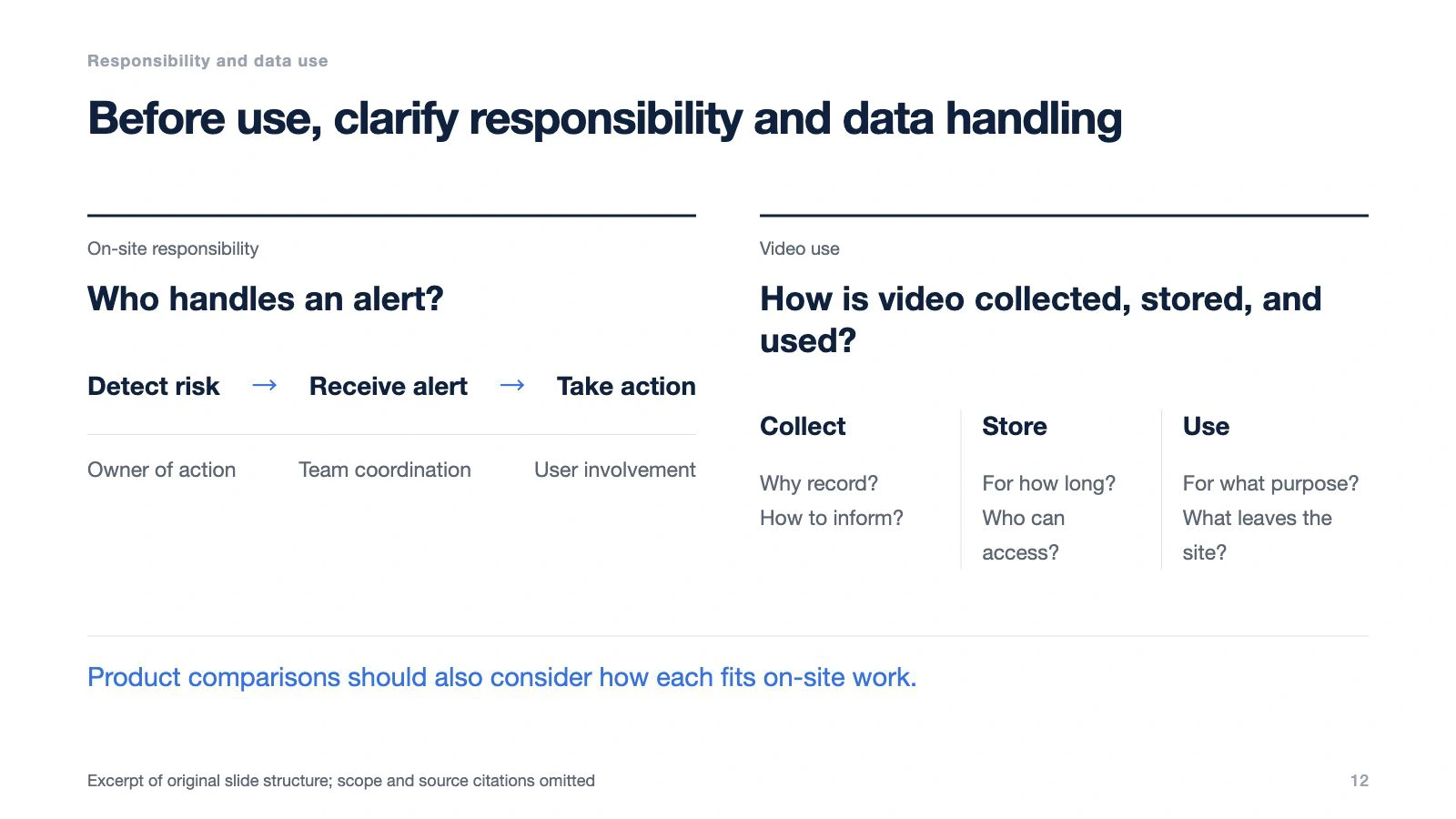
Public statistics are often retold in secondary material. In the retelling, units or time periods can disappear, or provisional figures can be treated as final. For selected key statistics, this round of work retrieved the original workbook and checked the specific cells, units, reporting period, and whether the data was labelled provisional or preliminary. We also had to check the denominator and whether a figure counted events or people. Two figures appearing side by side did not make them directly comparable.
I applied the same approach to public procurement data: for selected figures in summaries, we obtained the machine-readable original records again and recalculated them. The recalculation kept three concepts separate: the value of a procurement decision, actual payments, and the scale of paid use. A procurement decision does not mean money has already been paid, and a single contract cannot stand for the overall scale of paid use. The draft described these different types of record separately.
Public price quotes could not be ranked simply by converting them into one currency either. Different billing units, package contents, and service periods give the totals different meanings. We identified those conditions first, then discussed which prices could be compared.
For regulatory material, we labelled direct legal text, official guidance, and secondary interpretation separately. Where access to the original text was limited, the record retained the actual reading scope. Finding a relevant web page was not described as having read every provision.
Expanding coverage, then returning to the question
The market section initially covered a narrow geographical area. On review, I thought the coverage was insufficient and would skew the answer to “what approaches already exist”, so I expanded it to several representative regions. Afterwards, I asked that the work return to the target question: the purpose of wider coverage was a more accurate answer, not a longer list.
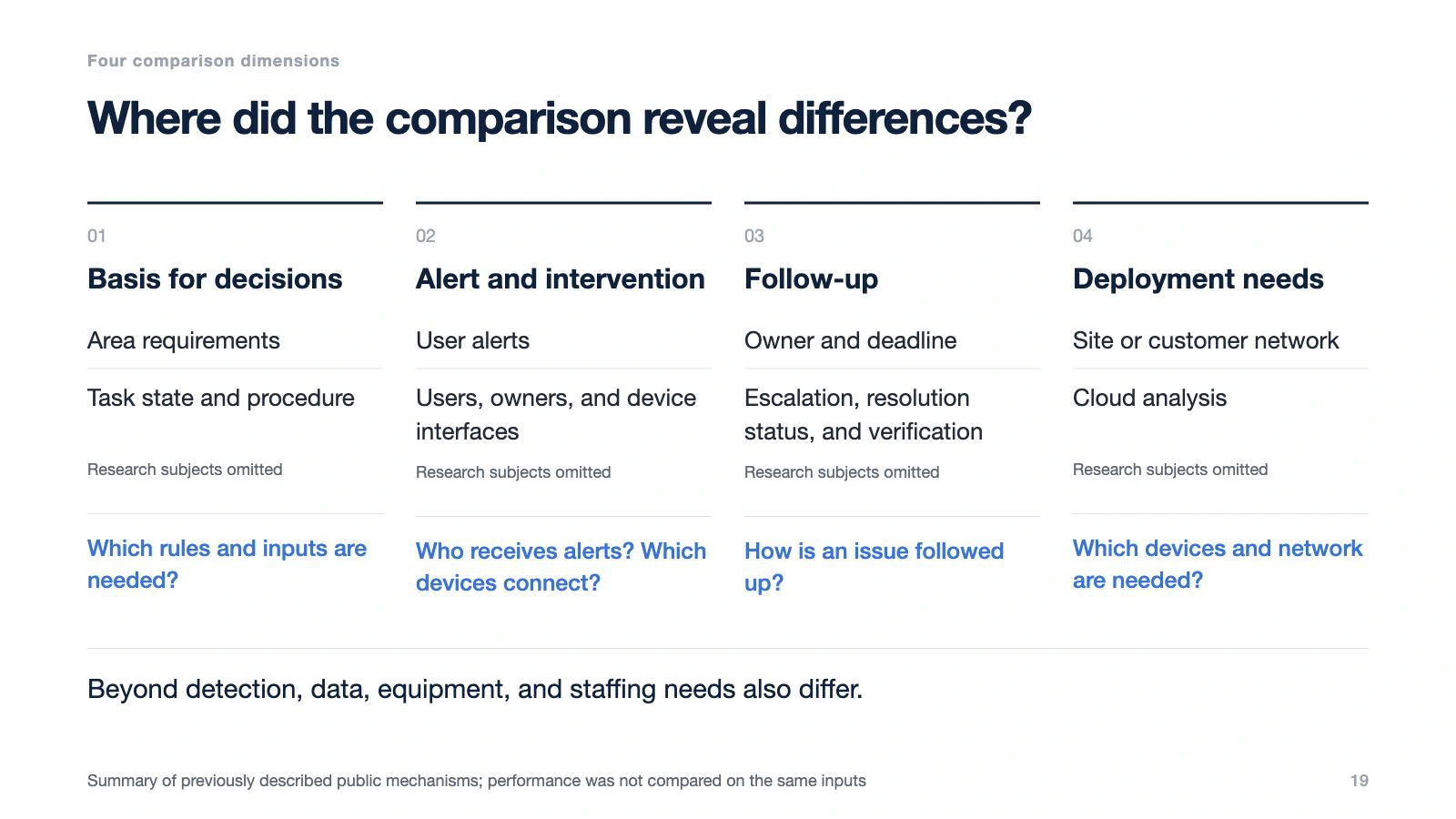
We checked candidate approaches against shared dimensions: the task each addresses, the setting it suits, and the conditions needed to deliver and use it. I took care to avoid two common errors. First, a figure for the entire global market should not be applied directly to a narrower need; a large total market does not give that niche the same scale. Second, an approach appearing under several brands should not be counted as several independent approaches.
When comparing product capabilities, I did not rely on short demonstration videos alone. We also checked official feature descriptions, deployment conditions, product versions, whether features were historical, current, or planned, and the basis for public figures, including who measured them and under what conditions. Each approach's strengths and limitations were written separately rather than cancelling each other out in one sentence. The checks also corrected several errors: some product-family relationships needed revision, and cases where different functions had been given the same name were separated and explained.
Nor did we read only the body text of web pages. This round of checking also looked at process diagrams, framework diagrams, and interface illustrations, restoring information missed by text extraction. If a diagram showed a module or interface, we could record what was depicted. Explaining how it operated required corresponding evidence of operation or use. That let both text and visuals inform the comparison while keeping their evidential limits clear.
Public demonstration videos: checking batches against the same dimensions
We collected public demonstration videos in batches and reviewed them in batches. I required each clip to be recorded against the same dimensions so that the videos could be compared.
The method had several parts. Sampling covered the full length of each video, rather than just its opening or most dramatic moments. We enlarged key frames, recorded timecodes, and gave each clip its own entry. We distinguished live footage, animation, and interface illustration because they support different claims. We inspected labels and buttons that affected a judgement at specific points instead of summarising from an overall impression. When the public material later expanded, new items followed the same standard. Previously reviewed clips kept their checked records; new material received its own analysis and review, with disputed points examined again at specific frames.
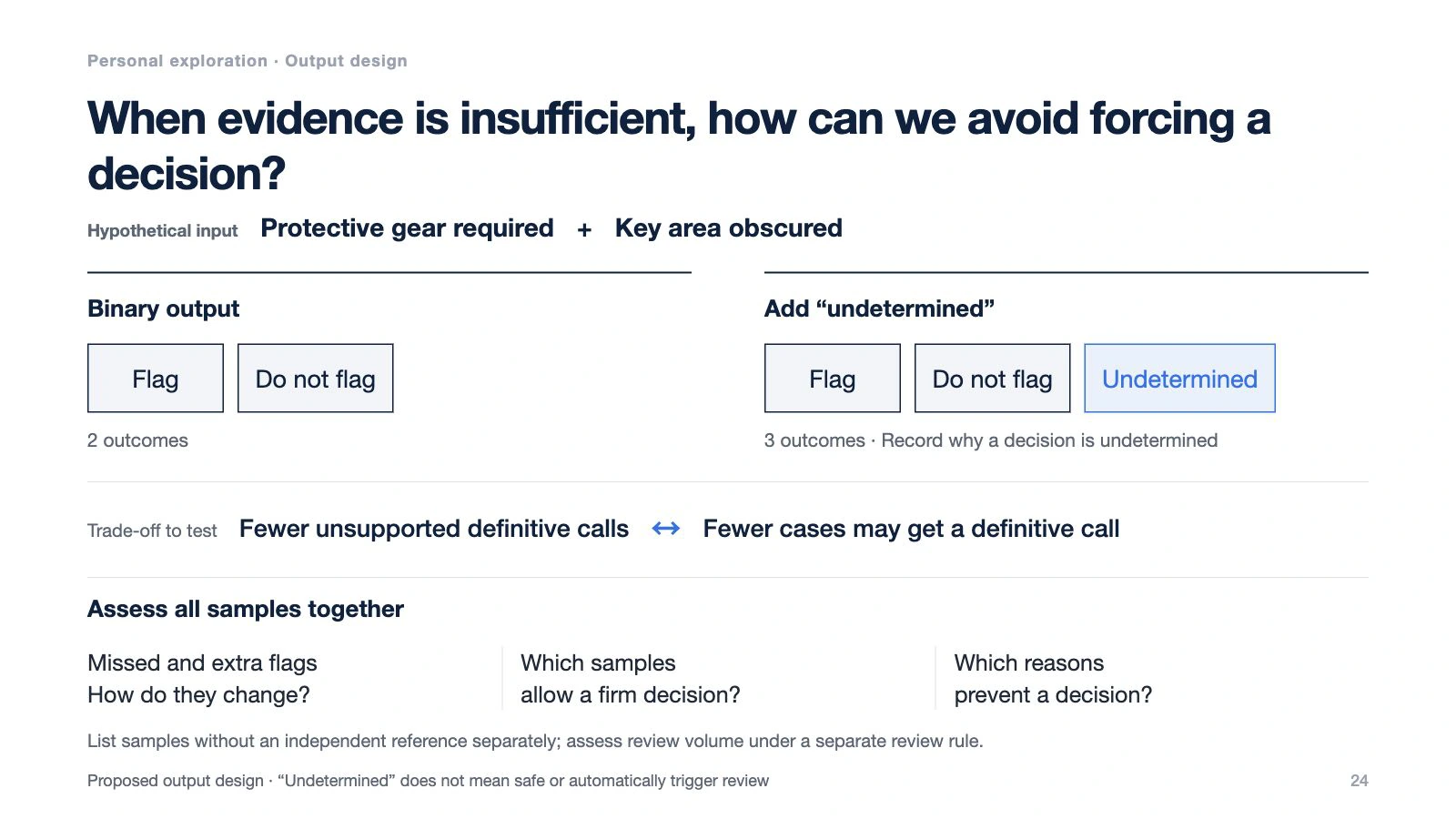
The review found a concrete problem: an early comparison overstated what could be inferred from seeing an interface, treating its appearance as evidence that a function was already running. This round of collaboration checked that point directly and separated the evidence into four levels: a button appeared; someone actually clicked it; a record was created or a status changed; and an effect occurred beyond the interface. Each level needed different footage. Evidence for one level did not establish the next.
The corrections went both ways. Some visible interface actions had been missed in the earlier record and were added. Some claimed outcomes had no support in the footage and were withdrawn. These findings concern what the public videos showed. They are not a comparative test of the algorithms.
Reaching out for additional reference material
Alongside searching and organising existing public sources, I emailed an external organisation to ask whether it could provide additional demonstrations or reference material. I explained what I hoped to understand and asked whether it had existing material it could conveniently share, so that more concrete examples might inform my understanding of the approaches.
Turning a lecture transcript into questions for further checking
I also provided a transcript of an external lecture. It contained misheard words and repetition, so we kept the original and built a paragraph index to make specific statements easy to find again. Where we had only text, we used only what the text could support and did not turn unclear technical terms into certain names.
In this round of collaboration, we turned technical statements in the transcript into questions that could be checked, then looked for related cases in public primary sources. The record distinguished what the transcript said, what the separately found sources confirmed, and whether the connection between them was clear. The cases came from different application settings. That difference had to stay visible; their reported effects could not simply be carried across.
Keeping academic evidence in context
For academic sources too, a one-sentence conclusion in a secondary summary was insufficient. We selected some studies, checked the actual versions, returned to available primary material and key tables in the published papers, and recalculated selected statistics.
In comparing them, I distinguished different research tasks and evaluation methods. Similar-sounding metrics cannot be ranked directly when the tasks or evaluation settings differ. We did not reproduce the experiments, so the draft says only what the papers reported. The evaluation task, sample scope, and comparison conditions also matter. A measure obtained from a limited sample cannot represent long-term effects in another setting. The papers' reported results and actual product performance were discussed separately.
Why the report needed to be reorganised
I was not satisfied with the quality of the early deliverable. I kept it as source material and reorganised the work around its stages: checking the requirements, organising the facts, analysing findings, writing the report, making the presentation, and checking delivery. I also required a written report that could stand on its own before making presentation materials, so that the slide sequence would not dictate the substance. Versions of the report and presentation shared one factual baseline, and earlier versions remained available for checking.
In reviewing the written draft, I gave specific feedback: it was hard to read through; the comparison did not show clearly where each approach was stronger or weaker; some sources had disappeared during rewriting; and the same cautions were repeated too often. The following draft moved the main differences and key comparisons forward before the detail, listed strengths and limitations separately, restored important citations beside the judgements they supported, and condensed repeated cautions while keeping necessary limits beside the relevant claims.
The presentation format changed too. I required each page to fit fully on one screen so I could move through it page by page without vertical scrolling. When text was too dense or a table too wide, the answer was to split the page or use a diagram or aligned comparison, not to keep shrinking the type. The colours and fonts could stay, but the placement of information and the way the key point emerged still needed separate work.
Later, I switched to reviewing the finished PDF directly and asked for diagrams, images, and reading cues to help a reader see the whole before going into detail. Citation styling, charts, and page breaks were adjusted as well.
There were two further structural corrections. First, one example had taken up too much of the second half and narrowed the apparent scope of the entire report; the revised draft actually broadened the analysis. Second, the recommendations read as though I were assigning work to the organisation. As an intern, I thought it was more appropriate to explain my understanding and possible directions to explore. I therefore asked that each suggestion state its reasoning, the conditions under which it might hold, and how it could be tested. That section was rewritten accordingly.
Checks before delivery and the next step
This round of production left two forms of material: a web page for presenting and a PDF that could be read on its own. Collaborative checks covered page navigation, video playback, source panels, returning from the Q&A page, notes, browser layouts, download links, and whether downloaded files matched the final versions. The checks found several issues: the video player wrapped out of place at certain widths; citations and tables were awkward across page breaks; and keyboard shortcuts interfered with downloading. Each received a targeted fix. I set the requirements for behaviour and reading experience; AI collaborating agents carried out and verified the individual fixes.
In the record from that week, these materials were still interim results awaiting my review.
Looking back on the week, I had retained the original material and organisation records, a source index, a comparison table, observations for individual video clips, a research draft, and reading and presentation versions that could actually be opened and checked. Each served a different purpose and was at a different stage of completion.
At the time of those preparation notes, I still needed to rehearse the full presentation to find where my own explanation was unclear. For sources that remained unconfirmed, I needed to decide whether to check further according to how much they affected the conclusions.
After the presentation: the prepared material had not fully become my own judgement
The feedback after the presentation, and my own review, showed me things I had not done well. The organisation, comparison, and production work described above did happen. But extensive effort and a complete draft did not, by themselves, show that the research answered the central questions or that I had mastered its contents.
The feedback also recognised some specific lines of thought. I answered some follow-up questions in the room, and we discussed who would handle analysis results and how they might lead to action. Those exchanges showed that there had been concrete thought behind the work. The conditions for use and likely acceptance had not been tested well enough, though, so I cannot describe the approach as validated.
I stopped the needs analysis too early
I had done a fairly thorough job of organising what existing approaches offered, but had not gone equally deep on why people needed them, why they would adopt or reject them, or exactly where current methods fell short. I used data more to set the scene than to reach specific judgements about which problems stood out after categorisation, who bore the consequences, and how that would affect choices. Adding more sources alone cannot answer those questions.
I already had a question tree and had put needs before the comparison. The gap was that I had not continued to develop and test that relationship. A heading called “needs”, or a list of signals, does not amount to an explanation of needs. Next time, I should test the analysis against a specific person or setting and a specific problem: what happens now, what a change would gain and cost, what supports that view, and what information could still change the conclusion.
Explaining the work live exposed gaps in understanding and evidence judgement
For some follow-up questions, I did not hold onto the subject of the question firmly enough, and I did not fully understand the conditions behind key technical judgements. For example, when asked whether users would accept something, I shifted to explaining the value of a larger project rather than answering the users' trade-offs directly.
In another instance, I described the end status of one public item as meaning that the whole matter had no further developments. A collaborative check afterwards found that it was also linked to a formal consultation document, so I corrected my description. Yet a later consultation does not itself prove implementation. This specific error taught me that failing to find the complete record establishes only the scope of my search; it does not prove that something does not exist. This correction happened after the presentation. I cannot treat it as something I had established at the time, or as automatic evidence that my own ability had improved.
Some analysis appeared in the long report but did not come across clearly in the presentation, so I need to select material better. It would also be inaccurate to attribute every problem to missing slides or an awkward explanation: some analysis had not been developed far enough, and I needed to fill gaps in my subject knowledge too.
Work completed with AI does not mean I mastered it independently
I did not personally reread enough of some key primary sources or test my understanding against the original passages thoroughly enough. The source and paper checks described earlier include work carried out through AI collaboration. Those operations were completed, but that does not mean I had personally understood every key passage, could explain its limits, or could answer a question when the conditions changed.
I had treated the completeness of the deliverables and their passage through multiple review rounds as important signs that I was prepared. This experience showed that I also need to test my own ability to explain. AI can help locate sources, suggest counterexamples, and find gaps. I need to explain for myself why I accept or revise a point, and what I still do not understand.
The collaborative review process needs work as well. Although it included requirements for needs analysis and practising explanations, its checks focused more on citations, keeping drafts in sync, and layout. It did not effectively test whether the central questions had been answered or whether I could explain the work independently. I need to improve both the checks and my own preparation. Passing several review rounds is not enough evidence of understanding.
What I have already done to follow up after the presentation
I did more than reflect after the presentation. I requested a fresh review of the complete report, mapping each piece of feedback to the relevant passage, the evidence it needed, and questions that remained unanswered. After reading the additional draft, I still found some analysis too general and asked for clearer explanations of causes and practical effects. Increasing the volume of sources or listing unknowns was not enough to end the discussion.
The specific additions included reorganising the needs analysis around what users had previously done, the difficulties they faced, and reasons for adopting or rejecting an approach. We returned to original public tables for further comparison and categorisation, keeping the subjects, denominators, years, and different metrics distinct. We then investigated specific situations, current measures, conditions under which those measures fail, and intervention studies for a selected problem. We also kept records of studies showing no improvement, sample limitations, and inconsistent figures, to test whether the original judgements needed narrowing.
I also asked for the link between findings and suggestions to be made explicit: where current methods fall short, which step new information could change, who would be able to act, and whether there was a more direct alternative. The resulting additions included substantially rewritten passages, comparison tables, calculations, and source records. They went beyond polishing the prose. My additional requests and review feedback, and the searches, calculations, checks against original text, and writing completed collaboratively, should all be recorded accurately. I cannot count every one of those operations as work I had mastered independently.
As more material was added, I pointed out that the main text was drifting from its central line of argument and asked for focus on the question it needed to answer, while keeping the research available for reference. The collaboration added an explanation of category coverage, brought comparisons from existing data back into the argument, and distinguished cases that could be explored directly, could only assist, or should first use other measures. I had confirmed one version, but raised specific questions when I viewed the presentation and asked to revise the report before adjusting the slides. I then clarified the structure of the whole piece again and began editing it section by section. These were real changes over several rounds of review, not work that was finished by one approval.
One round of revision produced a reading draft and PDF, followed by further updates to the editable text. At the time of this record, the opening section under the new structure had been revised; the remaining sections were still being worked through one by one. The previously exported PDF and presentation did not yet include all later changes. These remained materials for review. I could not describe them as delivered to, or endorsed by, leadership, and I could not count the work done after the presentation as preparation during the first week.
Later note: from sending an alert to looking for real change
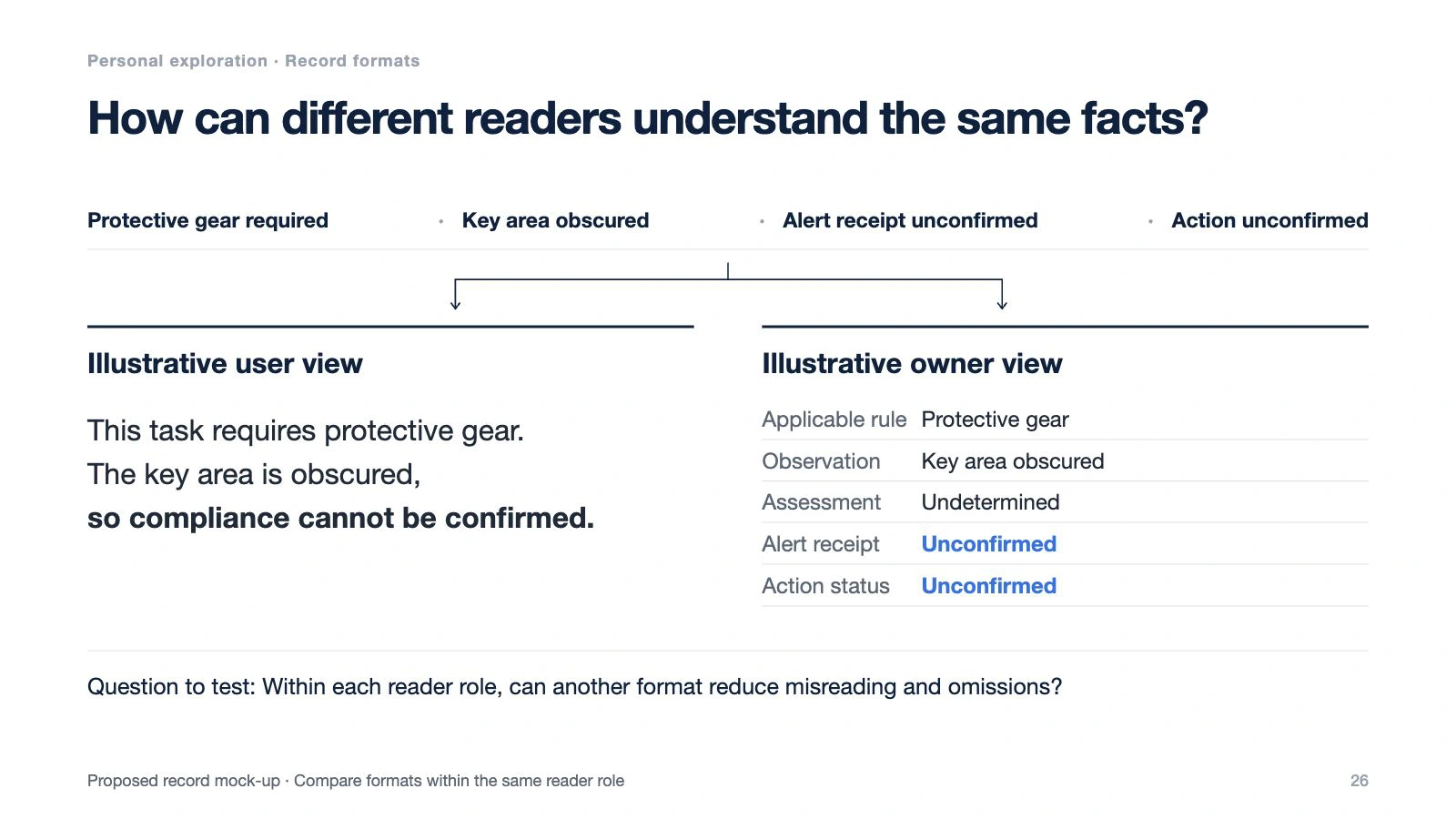
I had been inclined to take “detect a problem and send an alert” to mean “the outcome will improve”. After continuing to read, question, and request changes to the draft, I began to pay closer attention to what happens in between. Does the record help people find recurring causes? Do follow-up discussions and training change practice? Is that change then checked? Between an alert and a resolved problem are people's judgements and actions. Alert counts or the number of records alone cannot establish an effect.
That does not make timely alerts worthless. Problems that can be addressed immediately and problems requiring sustained follow-up need different treatment. If a cause lies in resources or working conditions, repeated alerts cannot replace an actual adjustment. My understanding of potential value became more specific, but the size of any real improvement still needs to be shown by outcomes.
In recent reviews, I asked specifically whether the comparison group was suitable, whether existing observations supported the conclusion, how a suggestion would change actual work, and why users would adopt it. I also asked for the report to be made clear before changing the presentation. Those questions and reviews happened. How much I personally read of the original material, recalculated independently, or mastered the technical content should still be recorded according to what I actually did.
At the time of this addition, I had not formally submitted the report PDF and planned to do so next. Any feedback after that submission would be recorded separately from feedback on the earlier presentation.
Still to put into practice: what to check next time
The review also produced steps I still need to put into practice. I should start with a few central judgements, personally return to their original passages or tables, and explain the problem, evidence, trade-offs, and limits without looking at a prepared answer. Then I should try to answer a follow-up question in which the conditions change. When I cannot explain something, I need to tell whether I lack knowledge, the evidence is insufficient, or my reasoning is wrong, and decide what to address accordingly. Whether I actually do this next time must be recorded from my performance. Writing a reflection does not mean I have improved already.
If useful, I could also check the focus of the task midway through preparation with a small sample of the current analysis, setting out my judgements, their support, and the main unknowns before confirming what to investigate next. That is a suggested improvement that came out of the discussion, not something I have already carried out.
I need to acknowledge the shortcomings of this work seriously, while preserving the research organisation and concrete work that did happen. My own work and others' should be judged by the analysis and answers we can actually give, rather than background, years of experience, or how polished a deliverable looks. Next time, I hope to turn the material into judgements I can explain, test, and revise myself.